
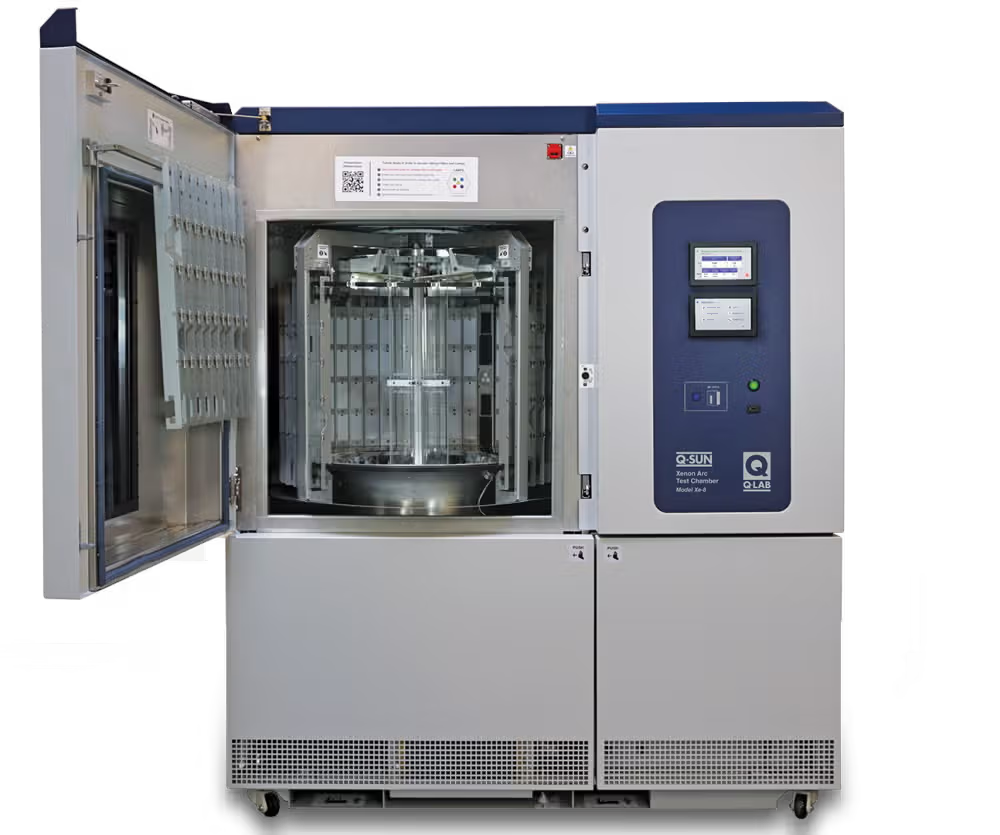
Understanding Xenon Arc Test Chambers and Their Role in Weathering Simulation
Among accelerated weathering technologies, the xenon arc test chamber holds a distinct advantage: it closely mimics the full spectrum of natural sunlight, making it a preferred choice for testing materials that will face real-world outdoor exposure.
Why Xenon Arc Technology Stands Out
Unlike fluorescent UV lamps that emit a narrower light spectrum, a xenon arc lamp produces light closely resembling the full solar spectrum, including UV, visible, and infrared wavelengths. This makes xenon arc testing particularly valuable for evaluating how materials will actually perform under real sunlight exposure over time.
Core Components of a Xenon Arc Chamber
The Xenon Lamp System
The heart of the chamber, this lamp requires specific filters to accurately replicate different light conditions, whether simulating direct sunlight, sunlight filtered through window glass, or other specific exposure scenarios.
Humidity and Water Spray Systems
Many xenon arc chambers incorporate controlled humidity and water spray cycles, simulating the combined effects of sunlight, moisture, and temperature that materials experience outdoors.
Black Panel Temperature Control
Rather than measuring ambient chamber temperature alone, xenon arc chambers typically monitor black panel temperature, which better reflects the actual surface temperature a dark-colored material would reach under real sun exposure.
Common Applications
Automotive interior and exterior components, coatings, plastics, textiles, and outdoor consumer products are all commonly tested using xenon arc chambers to predict long-term fading, cracking, or degradation from sun exposure.
For a deeper look at chamber specifications and available filter configurations, LIB Industry xenon arc test chamber offers additional technical detail.
See also : Building a Digital FNOL Portal: Mobile Claims Intake With Photo, Video, and Voice Capture
Comparing Xenon Arc to Other Weathering Methods
While UV fluorescent chambers offer a more cost-effective option for certain applications, xenon arc testing remains the gold standard when full-spectrum light accuracy genuinely matters for the material or product being evaluated.
Maintenance Considerations
Xenon lamps have a defined operational lifespan and require periodic replacement to maintain accurate light output, making lamp replacement scheduling an important part of ongoing chamber maintenance.
Frequently Asked Questions
Why is xenon arc testing considered more accurate than fluorescent UV testing? Because it replicates the full solar spectrum rather than a narrower UV-only range, offering a closer simulation of real sunlight exposure effects.
How long do xenon lamps typically last before requiring replacement? Lamp lifespan varies by usage intensity, but most require replacement after a set number of operating hours to maintain accurate light output.
What industries rely most heavily on xenon arc testing? Automotive, coatings, plastics, and outdoor consumer products industries are among the heaviest users of xenon arc weathering testing.
Final Thoughts
Xenon arc test chambers offer a uniquely accurate simulation of real-world sunlight exposure, making them an essential tool for industries where long-term material durability under sun exposure genuinely matters. Understanding the technology behind them supports better testing decisions.