Why Solid Hardwood Cutting Boards Are Returning to Modern Kitchens
Kitchen tools have become increasingly specialized, but sometimes the simplest materials remain among the most useful.
That’s one reason solid hardwood cutting boards continue to find a place in modern kitchens.
Plastic and composite boards offer convenience, while bamboo has become a common lower-cost alternative. But a well-made hardwood cutting board offers something different: a durable food-preparation surface that can be maintained, conditioned and, in many cases, refinished after years of use.
For home cooks who want kitchen tools built for long-term use, traditional hardwoods such as maple, walnut and cherry are worth considering.
What Makes a Cutting Board “Solid Wood”?
Not everything marketed as a wooden cutting board is constructed the same way.
Some products use bamboo, compressed fibers, composite materials or other engineered surfaces. Solid wood cutting boards, by contrast, are made from actual pieces of natural wood.
For kitchen use, hardwood species are generally preferred.
Common choices include:
- Hard maple
- Walnut
- Cherry
- Oak
Each wood has its own appearance and physical characteristics.
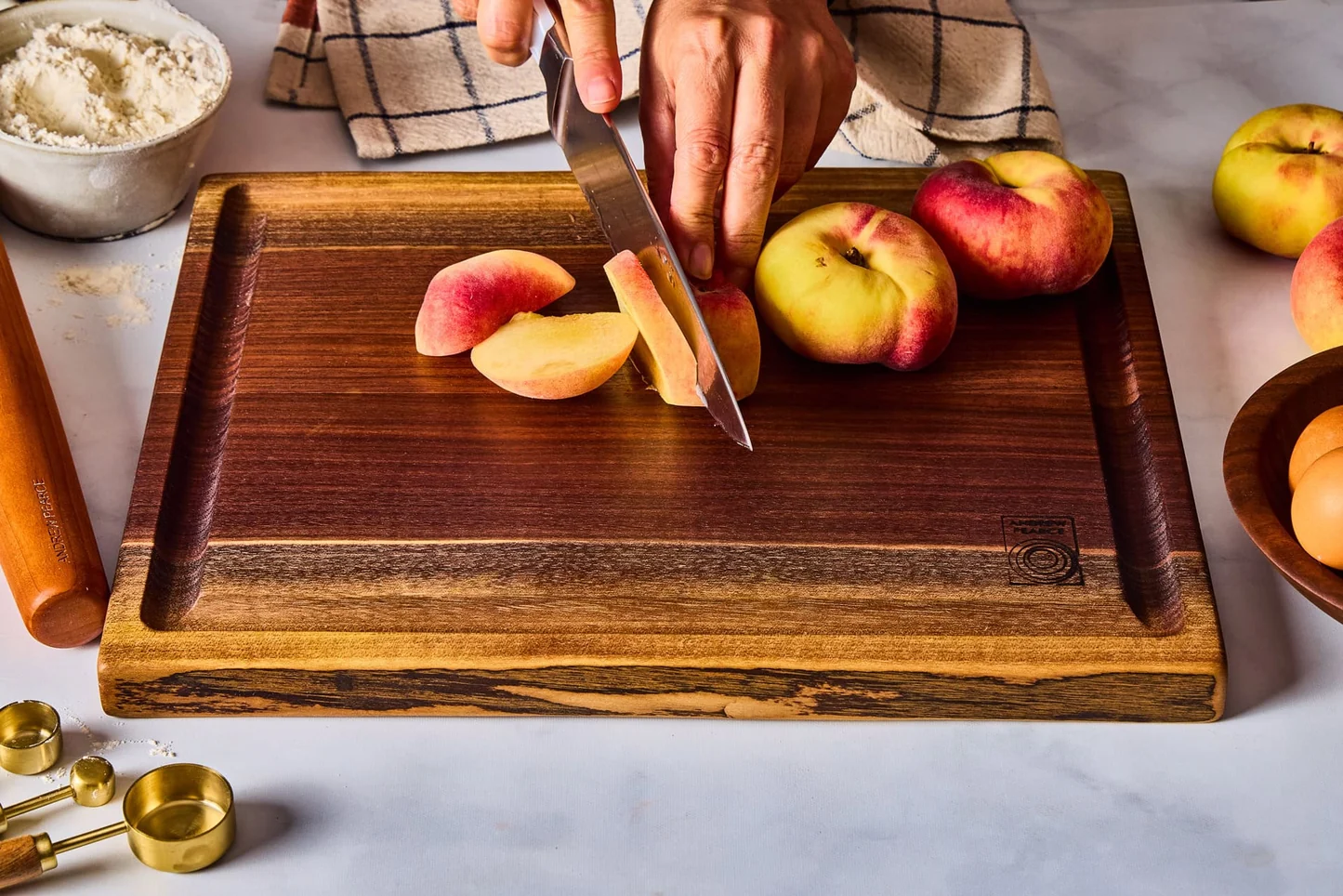
Maple is light and relatively dense. Walnut is recognizable for its darker brown tones. Cherry typically has a warmer appearance that can deepen over time.
The natural variation also means every board develops its own appearance rather than looking exactly like the next one coming off a production line.
Why Hardwood Works Well in the Kitchen
A cutting board has a deceptively difficult job.
It needs to withstand thousands of knife strokes, repeated cleaning, exposure to moisture and frequent movement around a kitchen.
At the same time, the surface shouldn’t be unnecessarily harsh on kitchen knives.
This combination helps explain why hardwood has been used for butcher blocks, countertops and cutting surfaces for generations.
A substantial hardwood board provides a solid working surface while remaining something the owner can maintain.
Knife marks don’t necessarily mean the end of the board.
They’re evidence that the board is doing its job.
Durability Is Becoming Part of the Buying Decision
Consumers frequently compare kitchen products based on initial price.
There’s another way to look at value:
How long will the product remain useful?
A lower-priced product that needs to be replaced several times may not necessarily provide better long-term value than a more substantial product that can be maintained.
Solid hardwood is particularly interesting from this perspective because its surface isn’t necessarily permanent.
Minor wear can be conditioned.
More significant surface wear can sometimes be sanded.
A properly constructed thick board can potentially be refreshed instead of discarded.
That gives solid wood an advantage for consumers interested in buying kitchen tools with longer usable lives.
Hard Maple Is Built for Everyday Use
If there’s one wood strongly associated with traditional cutting surfaces, it’s hard maple.
Hard maple has a relatively light appearance and provides a durable surface suitable for everyday chopping and food preparation.
It’s also versatile aesthetically.
A solid maple cutting board can fit naturally into kitchens ranging from farmhouse-inspired designs to minimalist contemporary spaces.
For someone who cares more about everyday functionality than dramatic color, maple is difficult to overlook.
Its combination of density, durability and traditional kitchen use has helped keep it relevant even as newer cutting-board materials have entered the market.
Walnut Brings Darker Color Into the Kitchen
Walnut offers a different experience.
Its rich brown coloration can turn an ordinary kitchen tool into something people are comfortable leaving on display.
That can matter because cutting boards increasingly serve more than one purpose.
A large walnut board might be used for meal preparation during the afternoon and then used for presenting bread, cheese or other foods later that evening.
While functionality should still come first, there’s nothing wrong with wanting a cutting board that looks good on the counter.
Natural walnut provides that without relying on artificial colors or printed patterns.
Cherry Develops Its Own Personality
Cherry is another traditional American hardwood that works particularly well when someone wants warmth rather than the light appearance of maple or the darker character of walnut.
One of cherry’s distinguishing characteristics is how its appearance can change over time.
Exposure to air and light can deepen its color, allowing the board to develop additional character as it ages.
For consumers accustomed to products designed to look identical forever, that can seem unusual.
For people who appreciate natural wood, it’s part of the appeal.
Wood Can Be Maintained Instead of Simply Replaced
Maintenance is one of the biggest differences between solid wood and many inexpensive kitchen products.
A wooden board does require some care.
It shouldn’t be soaked for extended periods.
It shouldn’t go through the dishwasher.
It should be washed, dried and stored appropriately.
And periodically, it should be conditioned.
Food-safe mineral oil is commonly used for wooden cutting boards because it penetrates the wood and helps prevent excessive drying.
Cutting-board wax can provide additional surface conditioning. Formulas commonly combine mineral oil with beeswax to help maintain the wood.
The process isn’t especially difficult.
For many owners, maintaining the board becomes a small part of normal kitchen upkeep.
Thickness Makes a Difference
Wood species gets much of the attention when people shop for cutting boards, but thickness deserves consideration too.
A substantial board tends to feel more stable during food preparation.
Thickness also provides more material between the cutting surface and the opposite side of the board.
That’s particularly relevant if the board eventually needs resurfacing.
A cutting board shouldn’t necessarily be evaluated like a decorative serving tray.
If it’s going to be used regularly for chopping and food preparation, construction and thickness matter.
Why Natural Grain Makes Every Board Different
One reason people gravitate toward solid wood is that the material doesn’t hide where it came from.
Natural grain patterns remain visible.
One maple board may have subtle variation while another contains more noticeable figuring. Walnut can range considerably in tone, and cherry changes as it ages.
These differences are normal.
They’re also difficult to replicate authentically with synthetic materials.
For consumers who want natural materials in their kitchens, those variations can make a cutting board feel less like another manufactured accessory and more like a permanent piece of kitchen equipment.
Solid Wood vs. Bamboo
Bamboo deserves separate consideration because it’s frequently grouped with traditional wood cutting boards.
Botanically, bamboo is a grass rather than a hardwood.
Bamboo cutting boards can be affordable, attractive and widely available, making them perfectly reasonable for many households.
But someone specifically shopping for a solid hardwood cutting board may be looking for different characteristics.
Hard maple, walnut and cherry provide the appearance, grain structure and repairability associated with traditional hardwood kitchen surfaces.
The decision shouldn’t simply be “wood-looking board versus wood-looking board.”
Material and construction matter.
Solid Wood vs. Plastic
Plastic cutting boards also serve an important purpose in many kitchens.
They’re lightweight, inexpensive and easy to find.
However, they’re fundamentally different products.
When a heavily used plastic board becomes deeply scored or warped, replacement is often the easiest option.
A quality wooden board can frequently be maintained for much longer.
That doesn’t mean every cook needs to eliminate plastic from the kitchen.
Instead, it explains why someone looking for a primary everyday cutting surface may prefer a substantial hardwood board.
Choosing Between Maple, Walnut and Cherry
For most consumers interested in solid hardwood, choosing a species can be relatively straightforward.
Choose maple if you want a light-colored, traditional workhorse for everyday food preparation.
Choose walnut if you prefer deeper brown colors and want something visually distinctive.
Choose cherry if you like warm tones and wood that develops additional character as it ages.
All three can make attractive and functional cutting boards.
The choice often comes down to appearance, personal preference and how the board will fit into the kitchen.
Craftsmanship Matters as Much as Wood Species
Simply using good hardwood doesn’t automatically produce a good cutting board.
How the material is selected, shaped, sanded and finished matters too.
Rough edges, uneven surfaces and inadequate finishing can detract from otherwise excellent material.
Smaller American woodworking companies have helped renew interest in traditionally made kitchen products by emphasizing these details.
Woods & Wax, for example, makes solid hardwood cutting boards in the United States from woods including maple, cherry and walnut.
Each board goes through multiple sanding stages before being conditioned with food-safe mineral oil and a protective wax treatment.
That approach reflects what makes solid hardwood appealing in the first place: begin with a straightforward natural material, finish it carefully and create something designed for actual use.
A Kitchen Tool Worth Maintaining
Trends in kitchen products will continue to change.
New composites, plastics and engineered materials will continue to appear, and many will offer genuine advantages.
But newer doesn’t automatically make traditional materials obsolete.
A well-made solid wood cutting board provides a durable work surface, natural appearance and something increasingly unusual in everyday consumer products: the ability to maintain and refresh it as it ages.
That’s a large part of why solid wood cutting boards continue to appeal to modern home cooks.
Instead of treating a cutting board as another disposable kitchen accessory, buyers can choose maple, walnut or cherry, care for it properly and allow the board to develop character through years of actual use.
Sometimes the most sustainable approach to a kitchen product isn’t continually finding a newer material.
It’s choosing a good material in the first place and taking care of it.