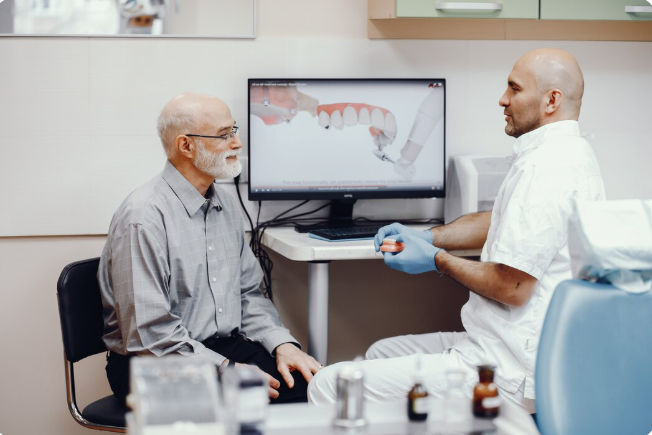
Why Consider a Single Tooth Dental Implant Instead of a Dental Bridge?
Losing a single tooth can affect your smile, chewing ability, and overall oral health. Fortunately, modern dentistry offers several ways to replace a missing tooth. Two common options are a dental bridge and a dental implant.
For many patients, a single-tooth dental implant can provide a stable, natural-looking solution that replaces both the missing tooth and its root. However, implants are not automatically the right choice for everyone. Your dentist can evaluate your oral health and explain which option best fits your needs.
Understanding the differences between implants and bridges can help you have a more informed conversation with your dental provider.
What Is a Single Tooth Dental Implant?
A Single Tooth Dental Implant is a replacement for one missing tooth. It typically consists of three main components: an implant post, an abutment, and a dental crown.
The implant post is placed into the jawbone and functions similarly to a natural tooth root. After the implant has had time to integrate with the surrounding bone, an abutment connects the implant to a custom-made crown.
How Does a Dental Implant Work?
The treatment generally takes place in several stages:
- Consultation and examination: Your dentist evaluates your teeth, gums, and jawbone.
- Treatment planning: Imaging may be used to determine the appropriate implant position.
- Implant placement: The implant post is surgically placed into the jawbone.
- Healing period: The implant integrates with the surrounding bone.
- Abutment placement: An abutment is attached once the implant has healed sufficiently.
- Crown placement: A customized crown is secured to complete the restoration.
Because the implant is anchored into the jawbone, it can provide a stable foundation for the replacement tooth.
What Is a Dental Bridge?
A dental bridge replaces a missing tooth by suspending an artificial tooth between supporting teeth. In a traditional bridge, the neighboring teeth are typically prepared to support the restoration.
The artificial tooth fills the gap and can restore basic chewing function and appearance.
How Does a Dental Bridge Work?
A traditional bridge generally involves preparing the teeth next to the missing tooth. The dentist then places a customized restoration over the supporting teeth, with the artificial tooth occupying the empty space.
Unlike an implant, a traditional bridge does not replace the root of the missing tooth.
Why Consider a Single Tooth Dental Implant?
A Single Tooth Dental Implant offers several potential advantages, particularly when compared with a traditional tooth-supported bridge.
1. It Replaces the Tooth Root
One of the biggest differences is that an implant replaces the root portion of the missing tooth.
A bridge generally relies on neighboring teeth for support, while an implant is anchored in the jawbone. This can provide a stable foundation for the replacement crown.
2. It Does Not Usually Require Altering Neighboring Teeth
A traditional bridge often requires preparation of the teeth adjacent to the missing tooth.
With an implant, the neighboring natural teeth can generally remain independent of the replacement tooth. This can be appealing to patients who want to preserve healthy adjacent teeth.
3. It Can Look Like a Natural Tooth
A customized implant crown can be designed to match the color, shape, and size of your surrounding teeth.
When properly planned and restored, the implant and crown can blend naturally with your existing smile.
4. It Provides Stable Support
Because the implant is secured within the jawbone, it can provide strong support for the replacement crown.
This stability may make eating and speaking feel more natural compared with some removable tooth replacement options.
5. It Can Help Maintain Jawbone Structure
After tooth loss, the jawbone around the missing tooth may gradually lose volume because it no longer receives stimulation from a natural tooth root.
An implant provides stimulation through the jawbone, which may help maintain bone structure around the implant site.
Are Dental Implants Better Than Bridges?
There is no universal answer. Both dental implants and bridges can be effective tooth replacement options.
The best choice depends on your oral health, bone condition, treatment preferences, budget, timeline, and long-term goals.
When a Bridge May Be Appropriate
A dental bridge may be considered when:
- You want a fixed tooth replacement without implant surgery.
- The neighboring teeth already require crowns or significant restoration.
- You are not an ideal candidate for an implant.
- You prefer a treatment that may be completed more quickly.
Your dentist can assess whether a bridge makes sense based on the condition of the surrounding teeth.
When an Implant May Be Appropriate
A Single Tooth Dental Implant may be considered when:
- You have adequate jawbone support.
- Your gums are healthy or can be treated successfully.
- You want to avoid relying on neighboring teeth for support.
- You are interested in a long-term tooth replacement option.
- You are comfortable with a treatment process that may take several months.

What Factors Determine Your Candidacy?
Before recommending an implant, your dentist will evaluate several aspects of your oral health.
Jawbone Health
Adequate bone is important for supporting an implant. If you have experienced significant bone loss, your dentist may discuss bone grafting or another procedure before implant placement.
Gum Health
Healthy gums provide an important foundation for implant treatment. Active gum disease may need to be addressed before surgery.
Overall Health
Your medical history and certain health factors can influence healing and treatment planning. Be sure to provide your dentist with accurate information about your health and medications.
How Long Does a Single Tooth Dental Implant Take?
The treatment timeline varies from patient to patient.
Some patients may complete treatment in several months, while others may need additional procedures that extend the timeline. The implant typically needs time to integrate with the jawbone before the final crown is attached.
A dental bridge can often be completed in a shorter timeframe, which may be an important consideration for patients who need a quicker restoration.
See also: Exterior Building Signage: How It Improves Business Visibility
How Much Does a Single Tooth Dental Implant Cost?
The total cost depends on factors such as the implant system, crown material, diagnostic imaging, dental office fees, and whether additional procedures are needed.
Bone grafting, tooth extraction, or treatment for gum disease may increase the overall cost.
When comparing an implant with a bridge, ask your dentist for a complete treatment estimate rather than comparing the price of one component alone.
How to Care for Your Dental Implant
Good oral hygiene is essential after implant treatment. Brush your teeth regularly, clean between your teeth, and follow your dentist’s recommendations for cleaning around the implant.
Regular dental examinations and professional cleanings can also help your dentist monitor the implant, crown, gums, and surrounding teeth.
Avoid habits such as chewing extremely hard objects, which can damage the crown or put unnecessary stress on your teeth.
Final Thoughts
Choosing between a Single Tooth Dental Implant and a dental bridge involves more than comparing prices or treatment times. An implant can replace the missing tooth root, preserve the independence of neighboring teeth, provide stable support, and offer a natural-looking restoration.
However, a dental bridge can also be a practical and effective option for many patients. The right choice depends on your individual oral health, preferences, budget, and long-term goals.
Before making a decision, schedule a comprehensive consultation with a qualified dental professional. Ask about the benefits and limitations of both options, the expected treatment timeline, maintenance requirements, and total cost. A personalized evaluation can help you choose the tooth replacement solution that best fits your smile and oral health needs.