Why Are Dry Rooms Essential for Lithium Battery Production?
Introduction
The rapid growth of electric vehicles, energy storage systems, consumer electronics, and industrial applications has significantly increased the demand for lithium batteries. As manufacturers strive to improve battery performance, safety, and reliability, production environments have become more sophisticated and tightly controlled. Among the most critical aspects of battery manufacturing is moisture management.
Lithium battery components are highly sensitive to moisture exposure during various stages of production. Even small amounts of humidity can affect material quality, reduce battery performance, and compromise manufacturing efficiency. To prevent these challenges, manufacturers rely on highly controlled environments that maintain extremely low humidity levels throughout the production process.
Advanced Battery Dry Rooms provide the controlled conditions necessary to support consistent battery manufacturing. These specialized environments help protect sensitive materials from moisture contamination and contribute to the production of high-quality lithium batteries.
What Is a Battery Dry Room?
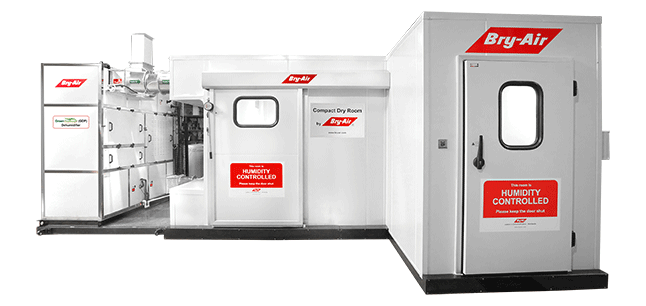
A battery dry room is a controlled manufacturing environment designed to maintain exceptionally low humidity levels.
These facilities utilize advanced dehumidification systems to create conditions where moisture-sensitive battery materials can be safely handled, assembled, and processed. The objective is to minimize water vapor in the air and prevent contamination during critical production stages.
Battery dry rooms have become a standard requirement in modern lithium battery manufacturing facilities due to the sensitivity of battery materials and chemical components.
How Dry Rooms Operate
Dry rooms use sophisticated moisture control systems to continuously remove water vapor from the air.
The process typically involves:
- Air dehumidification
- Humidity monitoring
- Air circulation management
- Environmental control systems
- Temperature regulation
Together, these systems maintain the ultra-low humidity conditions required for battery production.
Why Low Humidity Matters
Many battery materials react negatively when exposed to moisture.
Maintaining low humidity levels helps preserve material integrity and supports consistent manufacturing quality throughout the production cycle.
Why Is Moisture a Major Concern in Battery Manufacturing?
Moisture is one of the most significant environmental threats during lithium battery production.
Many battery components contain materials that can react with water vapor, leading to chemical changes that affect product quality and performance.
Impact on Raw Materials
Exposure to moisture can alter the characteristics of sensitive battery materials before they are incorporated into the manufacturing process.
These changes may reduce the effectiveness of key battery components and affect overall product consistency.
Effects on Manufacturing Processes
Moisture contamination can interfere with several stages of battery production, including:
- Electrode preparation
- Cell assembly
- Electrolyte filling
- Component storage
- Quality testing
Controlling humidity helps minimize production risks and maintain process stability.
Influence on Product Reliability
Proper moisture management contributes to improved battery reliability and long-term performance.
Reducing exposure to water vapor supports the production of batteries that meet stringent quality requirements.
How Do Dry Rooms Support Product Quality?
Product quality remains a top priority for battery manufacturers operating in highly competitive markets.
Dry rooms create stable environmental conditions that help ensure consistent production outcomes.
Enhanced Material Protection
Sensitive battery materials remain protected from moisture throughout handling and assembly processes.
This protection helps preserve critical material properties and supports reliable product performance.
Improved Process Consistency
Environmental stability contributes to repeatable manufacturing conditions.
Consistent humidity levels help reduce process variability and improve overall production control.
Reduced Defect Rates
Moisture-related contamination can contribute to manufacturing defects.
Dry room environments help minimize these risks and support higher production yields.
What Makes Lithium Battery Production More Demanding?
Lithium batteries require stricter environmental controls than many other manufacturing applications.
The chemical composition of battery components makes moisture management especially important.
Sensitivity of Battery Materials
Many lithium battery materials react readily with moisture.
These reactions can affect material performance and create challenges during production if environmental conditions are not carefully controlled.
Complex Manufacturing Requirements
Battery production involves multiple precision-driven processes that depend on stable environmental conditions.
Maintaining proper humidity control throughout these stages helps ensure consistent product quality.
Why Are Lithium Battery Dry Rooms Critical for Modern Gigafactories?
As global battery demand continues to grow, manufacturers are building larger and more advanced production facilities.
Specialized Lithium Battery Dry Rooms play a central role in supporting these operations by providing ultra-low humidity environments tailored to battery manufacturing requirements.
These facilities help maintain strict moisture control standards while supporting large-scale production volumes. By creating controlled conditions throughout manufacturing areas, dry rooms contribute to quality assurance, operational efficiency, and product reliability.
Supporting Large-Scale Production
Modern battery plants often operate around the clock to meet growing market demand.
Dry rooms help maintain consistent environmental conditions regardless of production volume or operating schedules.
Meeting Quality Standards
Manufacturers must comply with rigorous quality requirements to ensure battery performance and safety.
Controlled environments support these standards by minimizing environmental contamination risks.
What Are the Operational Benefits of Dry Rooms?
In addition to supporting product quality, dry rooms offer several operational advantages.
These benefits contribute to improved manufacturing efficiency and long-term facility performance.
Increased Production Efficiency
Stable environmental conditions help reduce interruptions caused by moisture-related issues.
This allows manufacturers to maintain smoother production workflows.
Better Resource Utilization
Reduced contamination risks help minimize material waste and improve resource efficiency.
This contributes to lower production costs and enhanced operational performance.
Enhanced Process Control
Advanced monitoring systems provide real-time visibility into environmental conditions.
This enables operators to maintain precise control over humidity and related manufacturing variables.
What Factors Should Manufacturers Consider When Designing a Dry Room?
Successful dry room implementation requires careful planning and engineering.
Several factors influence system performance and operational effectiveness.
Humidity Requirements
Different battery chemistries and production processes may require specific humidity levels.
Understanding these requirements is essential for proper system design.
Facility Size and Layout
Production capacity and facility configuration affect airflow patterns and moisture control strategies.
Proper design helps ensure consistent environmental performance throughout the manufacturing space.
Energy Efficiency
Dry rooms operate continuously and can represent a significant portion of facility energy consumption.
Energy-efficient technologies help reduce operating costs while maintaining required humidity conditions.
How Is Dry Room Technology Evolving?
Battery manufacturing continues to advance rapidly, driving innovation in environmental control technologies.
New developments focus on improving efficiency, automation, and system performance.
Advanced Monitoring Solutions
Modern dry rooms increasingly incorporate intelligent sensors and automated control systems.
These technologies enable more precise environmental management and real-time performance optimization.
Greater Energy Optimization
Manufacturers are adopting energy-efficient dehumidification technologies that reduce operating costs while maintaining ultra-low humidity conditions.
Scalability for Future Growth
As battery production expands worldwide, dry room systems are being designed to support larger facilities and evolving manufacturing requirements.
These advancements help manufacturers meet growing demand while maintaining strict quality standards.
Conclusion
Dry rooms have become an essential component of modern lithium battery manufacturing. By maintaining ultra-low humidity environments, these specialized facilities protect moisture-sensitive materials, improve process consistency, and support the production of high-quality batteries.
Effective moisture control helps manufacturers reduce contamination risks, enhance operational efficiency, and maintain the reliability standards required in today’s competitive battery industry. As global demand for lithium batteries continues to increase, advanced dry room technology will remain a critical factor in successful battery production.
For organizations seeking advanced environmental control solutions for battery manufacturing, Bry-Air offers innovative dry room technologies designed to support superior moisture management, operational efficiency, and consistent product quality.