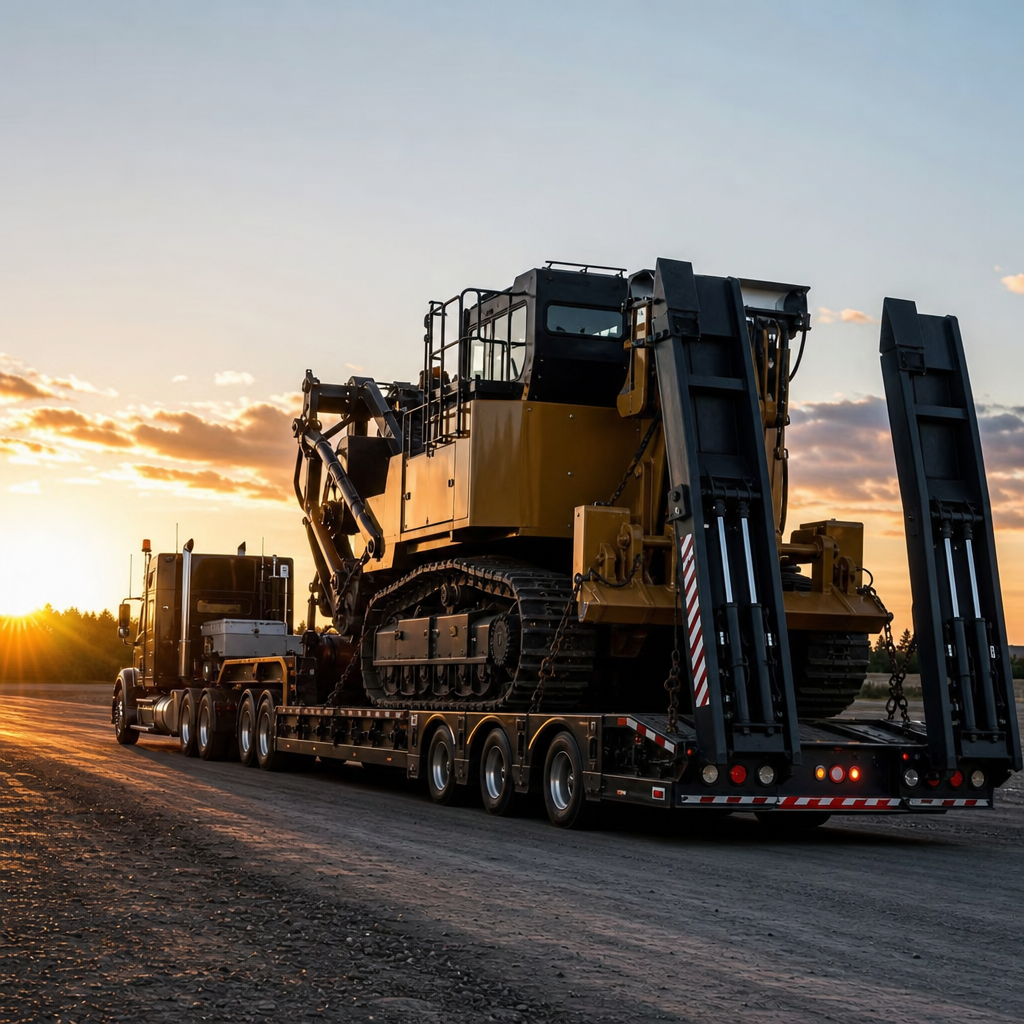
RGN Trailer Guide: Mastering Oversized Hauling with the Right Equipment and Compliance
Transporting oversized freight is one of the most technically demanding operations in the trucking industry. Whether you’re moving heavy construction machinery, industrial equipment, or large structural components, the trailer you choose can make or break the entire operation. Among the many specialized trailer types available, the Removable Gooseneck — commonly known as the RGN — stands out as one of the most versatile and capable options for heavy haul logistics. Understanding how RGN trailers work, when to use them, and how to navigate the regulatory landscape surrounding oversized loads is essential knowledge for any freight professional operating in today’s competitive market.
What Is an RGN Trailer and Why Does It Matter?
An RGN trailer is a specialized flatbed-style trailer designed with a detachable front section — the gooseneck — that allows the trailer deck to drop to ground level. This low-to-the-ground loading capability is what sets the RGN apart from standard step-deck or flatbed trailers. When the gooseneck is removed, heavy equipment such as bulldozers, excavators, cranes, and other tall machinery can be driven directly onto the trailer deck without the need for ramps or cranes. Once loaded, the gooseneck reattaches and the cargo is secured for transport.
This design is particularly valuable when hauling freight that exceeds standard height restrictions. Because the deck sits so close to the ground, the overall height of the loaded trailer is significantly reduced compared to other trailer types. This means fewer bridge clearance issues, fewer route restrictions, and ultimately a more efficient delivery process for loads that would otherwise require extensive rerouting or special infrastructure accommodations.
See also: How Technology Is Revolutionizing Online Learning Platforms
RGN Configurations and Weight Capacities
RGN trailers come in a wide range of configurations designed to accommodate varying load weights and dimensions. A standard RGN typically handles loads up to 40,000 to 42,000 pounds, while multi-axle RGN trailers — sometimes called “stretch RGNs” — can accommodate loads well in excess of 100,000 pounds when properly permitted. The number of axles, the length of the trailer, and the distribution of weight across those axles all play critical roles in determining what a specific RGN configuration can legally and safely transport.
Choosing the right configuration requires a detailed understanding of both the cargo specifications and the regulations governing the roads the load will travel. Axle spacing, gross vehicle weight, and individual axle weight limits all factor into route planning and permitting decisions. Experienced logistics providers work closely with shippers to match the right trailer configuration to each unique load, ensuring both safety and regulatory compliance from origin to destination.
Navigating Permits and Regulations for Oversized Loads
One of the most complex aspects of oversized hauling is the permitting process. Every state has its own set of regulations governing the movement of oversized and overweight loads, and carriers must obtain the appropriate permits before a single wheel turns. These permits specify allowable dimensions, approved routes, travel time restrictions, and escort vehicle requirements. Failing to comply with permit conditions can result in significant fines, load seizures, and damage to a carrier’s operating authority.
For carriers operating in Colorado, for example, understanding state-specific requirements is non-negotiable. The Colorado Department of Transportation provides detailed guidance on truck permitting requirements, and carriers can access Colorado’s official truck permit information to review current regulations, apply for permits, and understand route-specific restrictions. Staying current with these requirements is not just a legal obligation — it’s a fundamental part of professional heavy haul operations.
Escort Vehicles and Pilot Car Requirements
Many oversized loads require the use of escort vehicles, commonly called pilot cars, to safely guide the transport through traffic and alert other drivers to the presence of a wide or tall load. The number of escort vehicles required, their positioning relative to the load, and the qualifications of the escort drivers are all dictated by state regulations and can vary significantly from one jurisdiction to the next. Multi-state moves require carriers to understand and comply with the requirements of every state the load will pass through, which adds another layer of complexity to route planning and coordination.
How RGN Trailers Support Business Competitiveness
In an industry where margins are tight and customer expectations are high, having access to the right equipment at the right time is a genuine competitive advantage. Businesses that rely on heavy haul logistics — from construction companies to energy sector operators — need freight partners who understand the nuances of oversized transport and can deliver reliable, compliant service. The ability to move large equipment quickly and safely directly impacts project timelines, operational costs, and ultimately, profitability.
This is a dynamic that logistics providers across the country have had to adapt to as market conditions evolve. As explored in a detailed industry analysis, how freight companies in competitive markets help businesses stay ahead often comes down to specialized capabilities, responsive service, and deep regulatory knowledge — all qualities that define top-tier heavy haul operators.
Bear Down Logistics: A Trusted Resource for RGN Hauling
For shippers and freight professionals looking to deepen their understanding of RGN trailer operations, Bear Down Logistics offers one of the most comprehensive and practical resources available. The RGN Trailer Guide published on their platform covers everything from trailer configurations and load securement best practices to permitting considerations and route planning strategies. It’s an invaluable reference for anyone involved in the planning or execution of oversized freight moves.
Bear Down Logistics has built a strong reputation in the heavy haul sector by combining operational expertise with a commitment to transparent, client-focused service. Their team understands that every oversized load presents unique challenges, and they approach each project with the thoroughness and attention to detail that complex freight demands. Whether you’re a first-time shipper of heavy equipment or an experienced logistics manager looking to optimize your heavy haul operations, their resources and team provide genuine value.
Best Practices for Successful Oversized Freight Operations
Successful oversized hauling doesn’t happen by accident. It requires careful pre-trip planning, thorough knowledge of equipment capabilities, strict adherence to regulatory requirements, and clear communication between all parties involved in the move. Load securement is particularly critical — improper tie-down techniques or inadequate blocking and bracing can result in catastrophic load shifts that endanger drivers, other motorists, and the cargo itself.
Communication and Coordination Across the Supply Chain
Effective communication between shippers, carriers, permit agencies, and escort services is the backbone of any successful oversized haul. Delays in permitting, unexpected route closures, or last-minute changes to cargo dimensions can cascade into significant operational disruptions if not managed proactively. Building strong relationships with experienced logistics partners who have established workflows for handling these variables is one of the most effective ways to reduce risk and improve outcomes in heavy haul freight.
Conclusion
RGN trailers represent one of the most capable tools in the heavy haul logistics arsenal, offering unmatched versatility for transporting tall, heavy, and oversized freight. But equipment alone is only part of the equation. Regulatory compliance, expert route planning, proper load securement, and strong logistics partnerships are equally essential to delivering oversized loads safely and on schedule. As the freight industry continues to evolve, operators who invest in knowledge, compliance, and the right equipment will be best positioned to meet the growing demands of heavy haul customers across every sector.