How Industrial Racking Systems Improve Warehouse Organization
Most warehouse inefficiency doesn’t come from bad software or slow workers. It comes from storage layouts that were never designed with real workflow in mind, where pallets get stacked wherever there’s open floor space and pickers end up walking longer routes than necessary just to find inventory. Well-planned industrial racking systems fix this at the root, and the difference it makes to daily operations is bigger than most facility managers expect until they see it firsthand.
Storage Layout Is Workflow, Whether You Plan It or Not
Every warehouse has a storage layout, even if nobody designed it on purpose. The question is whether that layout was chosen deliberately based on how product actually moves through the facility, or whether it just happened over time as space ran out and decisions got made under pressure.
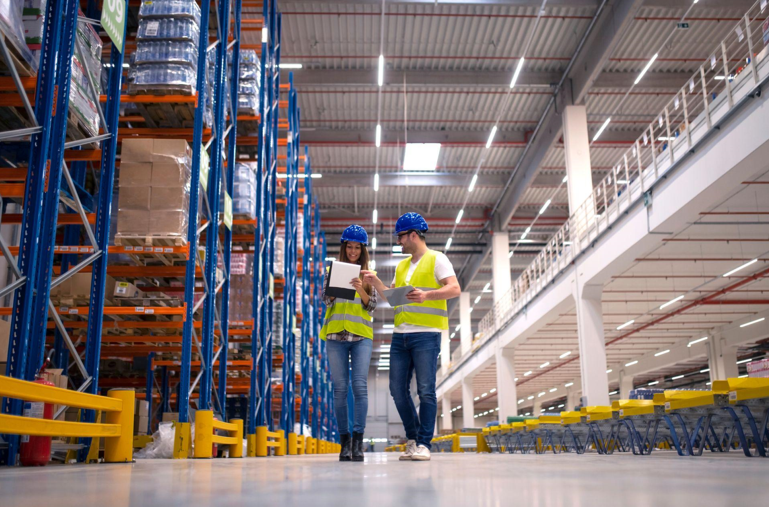
Racking systems force a level of intentionality that loose floor storage doesn’t. Selective pallet racking, for example, gives every SKU a defined location, which means pickers aren’t hunting through disorganized stacks trying to remember where something ended up last week. That alone reduces picking time significantly, especially in facilities with high SKU counts where memory-based storage breaks down fast.
The layout also affects how efficiently forklifts and pickers move through the building. Racking aisles create predictable traffic patterns, which reduces congestion and the kind of near-miss incidents that happen when equipment and pedestrians are navigating an unstructured space with no clear paths.
Vertical Space Is the Most Underused Asset in Most Warehouses
A huge amount of wasted warehouse capacity sits above eye level. Facilities that store product in single layers on the floor are leaving a significant percentage of their building’s actual volume unused, and that’s space they’re often paying rent or mortgage costs to maintain regardless of whether it’s holding inventory.
High-density racking systems change this calculation directly. Selective racking, drive-in racking, and push-back systems all use vertical space differently depending on how fast product turns over and how much selectivity you need for individual pallets. A facility with slower-moving bulk inventory might benefit from drive-in racking that sacrifices some selectivity for maximum density, while a facility with high SKU turnover usually needs the individual pallet access that selective racking provides.
Getting this choice right matters more than people expect. Choosing high-density racking for fast-moving inventory can actually slow down operations, because pickers lose the ability to access specific pallets without moving others out of the way first. Matching the racking type to the actual inventory behavior in your facility is where the real organizational gains come from, not just adding more racking in general.
Organization Supports Accuracy, Not Just Speed
People usually talk about racking in terms of speed and space, but the accuracy improvements matter just as much. When every SKU has a defined, labeled location, the chances of picking the wrong item or losing track of inventory drop noticeably. This becomes even more important as facilities scale up their operations or start layering in warehouse automation, since automated systems depend on accurate, predictable storage locations to function correctly in the first place.
A facility running goods-to-person robots or automated storage and retrieval systems can’t function well on top of a disorganized racking layout. These systems rely on precise location data, so the underlying racking structure needs to support that level of accuracy from the start. Retrofitting automation onto a poorly organized storage layout tends to expose problems that were always there, just previously hidden by manual workarounds.
Inventory counts also become more reliable with a properly racked facility. Cycle counting is far more accurate when locations are fixed and labeled, compared to a facility where product placement shifts based on whatever space happened to be open that day.
Safety Is Part of Organization, Not a Separate Conversation
Racking systems that are properly designed and installed reduce a real category of warehouse risk. Unstable stacking, overloaded shelving, and blocked emergency routes are common in facilities without structured racking, and these aren’t minor issues. They’re a leading cause of warehouse injuries and product damage.
Weight capacity matters here more than people account for during planning. Racking systems are engineered for specific load limits, and exceeding those limits, even by what seems like a small margin, creates real structural risk. A properly designed racking layout accounts for the actual weight and dimensions of the inventory being stored, not just a general assumption about what racking usually holds.
Regular inspection matters too, since racking takes wear over time from forklift contact, load shifts, and general use. A facility that treats racking inspection as a routine part of maintenance, rather than something addressed only after visible damage appears, avoids the kind of structural failures that can shut down an entire aisle or section of the warehouse.
Labeling and signage tie directly into safety as well, not just organization. Clear weight limits posted at each bay, visible aisle markings, and consistent labeling reduce the chance of human error, which is still the most common cause of racking-related incidents even in facilities with well-engineered systems in place.
Planning Racking Around Growth, Not Just Current Needs
One mistake facilities make is designing a racking layout around exactly what they need today, without leaving any flexibility for growth or seasonal fluctuation. Racking systems are a significant investment, and reconfiguring them a year or two later because the layout can’t accommodate a new product line or increased volume is an expensive way to learn that lesson.
Modular racking systems that can be reconfigured or expanded tend to hold up better over time than fixed layouts designed for a single moment in the business. This is particularly relevant for growing operations or seasonal businesses where storage needs shift significantly throughout the year.
It’s also worth thinking about how racking interacts with future automation plans, even if automation isn’t part of the immediate project. A racking layout designed with future flexibility in mind avoids a costly rebuild if automation gets added down the line.
Aisle width deserves the same forward-looking treatment. Narrower aisles increase storage density, but they also limit which equipment can operate in the space. A facility planning to introduce narrow-aisle forklifts or automated guided vehicles later needs to account for those turning radii and clearance requirements now, rather than discovering the aisles are too tight once new equipment actually arrives.
If you’re evaluating your current racking setup or planning a new facility layout and want a clearer sense of what would actually work for your inventory and workflow, it helps to talk through the specifics before committing to a system. Let’s Connect early in the planning process, since the layout decisions made at this stage are the ones that determine how well the warehouse actually functions for years afterward.
See also: Exterior Building Signage: How It Improves Business Visibility
Getting Real Value From a Racking Investment
Industrial racking systems do more than create storage space. They shape how efficiently a warehouse operates, how accurately inventory gets tracked, and how safely the facility runs day to day. The businesses that treat racking as a strategic decision, rather than an afterthought once the building is already full, are the ones seeing the biggest gains in organization and throughput.
MTLI has designed and installed racking systems across a wide range of industrial and distribution facilities, and the pattern holds true consistently: layouts planned around actual workflow and future growth perform far better than layouts chosen reactively. If you’re rethinking your storage setup, contact us today and we can walk through what would actually work best for your operation.